
Roots of Resilience: How One Maui Student is Reimagining Wildfire Defense
As Hawai‘i Land Trust wraps up its sixth year of the Ahupua‘a Stewards Program on Maui this week, we are pleased to recognize the work of 2025 program participant Dominick Philippe Guiwa.
Dominick, a Maui High School graduate who is preparing to attend Santa Monica College in the fall to study construction and mechanical engineering, was inspired by his work in the Ahupua‘a Stewards Program to develop an environmentally sustainable wildfire suppression agent using native Hawaiian plants.
Dominick said his work with HILT across seven sites on Maui helped him better understand and appreciate the importance of Hawai‘i’s culture and ‘āina.
“If it weren’t for this program and how it opened my eyes as to how I had been living, I wouldn’t have come up with the idea or have this passion to pursue this research,” he said.
Dominick collected plants from HILT’s Waihe‘e Coastal Dunes and Wetlands Refuge and other HILT community partners as he evaluated the use of biosurfactant formulations derived from ʻĀnapanapa (Colubrina asiatica), A‘e (Xylosma hawaiensis), and ‘Awapuhi (Zingiber zerumbet).
“The chemicals used now for firefighting contain PFAS (synthetic, man-made per- and polyfluoroalkyl substances frequently referred to as forever chemicals),” he said. “I thought to myself, wouldn’t it be crazy to use plants to fight fires? If firefighters are using chemical products to enhance their water, can we extract that from native Hawaiian plants?”
Dominick’s research won awards at the Maui County and Hawai‘i State Science and Engineering Fairs this year, including the Citadel Innovation Award and Daniel K. Inouye Innovation Honor. His research also qualified him to present at the Regeneron International Science and Engineering Fair – the world’s largest pre-college science competition – in Arizona last May. His work has been particularly meaningful following the 2023 Maui wildfires, he said.
Using a Maui Economic Development Board grant awarded in fall of his senior year, Dominick continued the research for months, conducting stability testing, volumetric expansion, and ignition and re-ignition suppression trials with guidance from the Maui Fire Department. ʻĀnapanapa extracts had the most consistent fire knockdown performance.
“Results indicate that plant-derived biosurfactant formulations, particularly those optimized via ultrasonic extraction, can achieve performance comparable to commercial suppressants while reducing environmental impact,” his research paper states. “This work highlights the potential of locally sourced, biodegradable materials for sustainable wildfire response while supporting native restoration and reducing invasive fire-prone species.”
Dominick is also involved with robotics, athletics, and volunteer activities, and he founded the public health education campaign SPFwithAloha.
Following 2 years at Santa Monica College, Dominick said he hopes to transfer to a larger university such as the Massachusetts Institute of Technology or Stanford to finish his engineering studies and eventually move back to Hawai‘i to work in land management.
“It’s important to explore and cover things that you haven’t thought about yet,” he said. “Being born and raised on Maui, Ahupua‘a Stewards was eye opening – our culture and ‘āina are integrated with everything around us.”
Ahupua‘a Stewards is a paid internship offered in partnership with the University of Hawai‘i Maui College that helps high school students on Maui develop and implement environmental decisions informed by ahupua‘a systems. The program is supported by Kamehameha Schools.
Registration for next summer’s program will open in spring 2027. Check back here for updates.
Top Photo: Maui High School graduate Dominick Philippe Guiwa (third from left) participates in the fifth cohort of the Ahupua‘a Stewards Program in summer 2025 visiting Waikamoi Preserve.
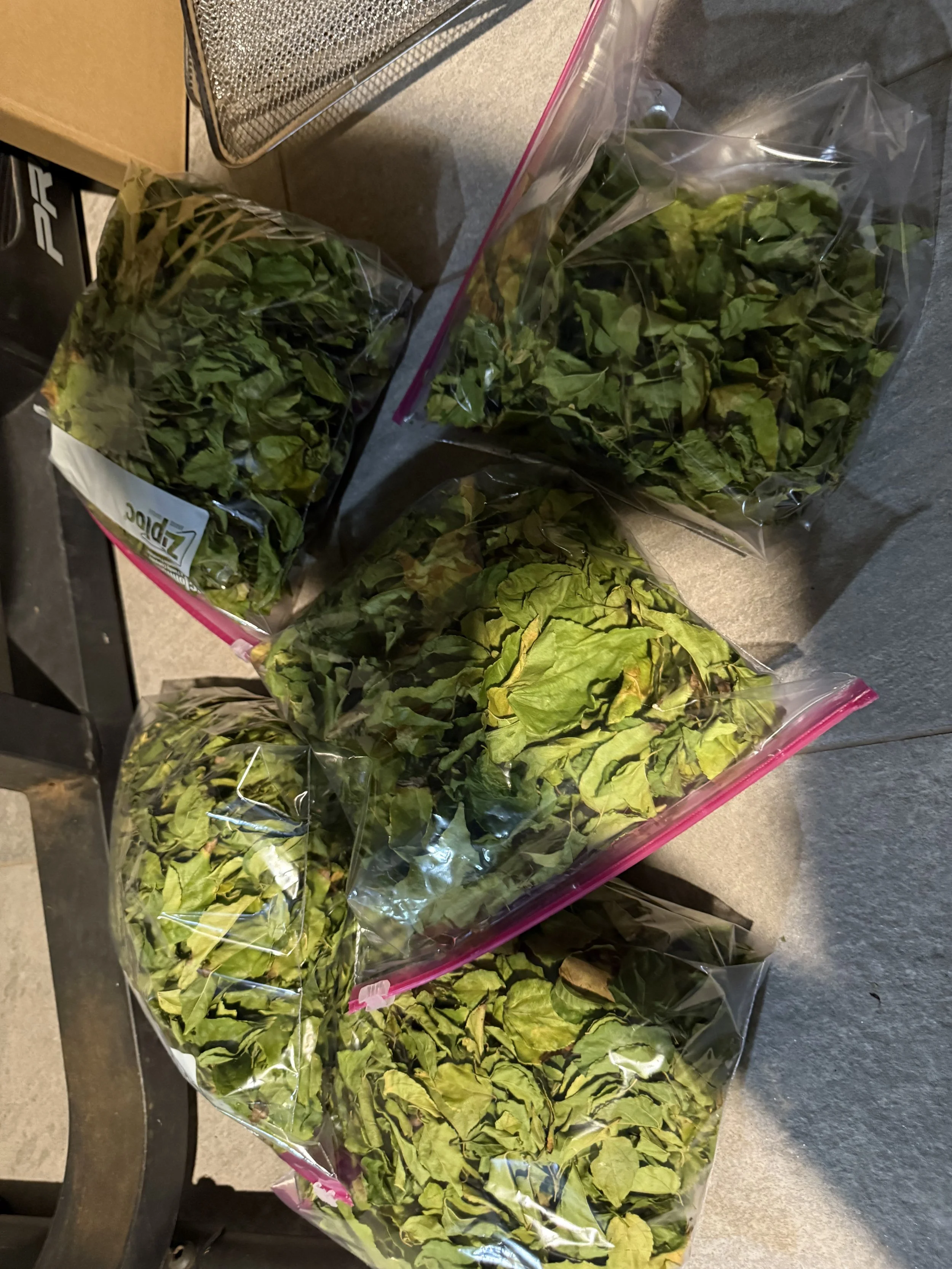
ʻĀnapanapa samples are dried before being measured and macerated using a mortar and pestle. Photos courtesy Dominick Philippe Guiwa.
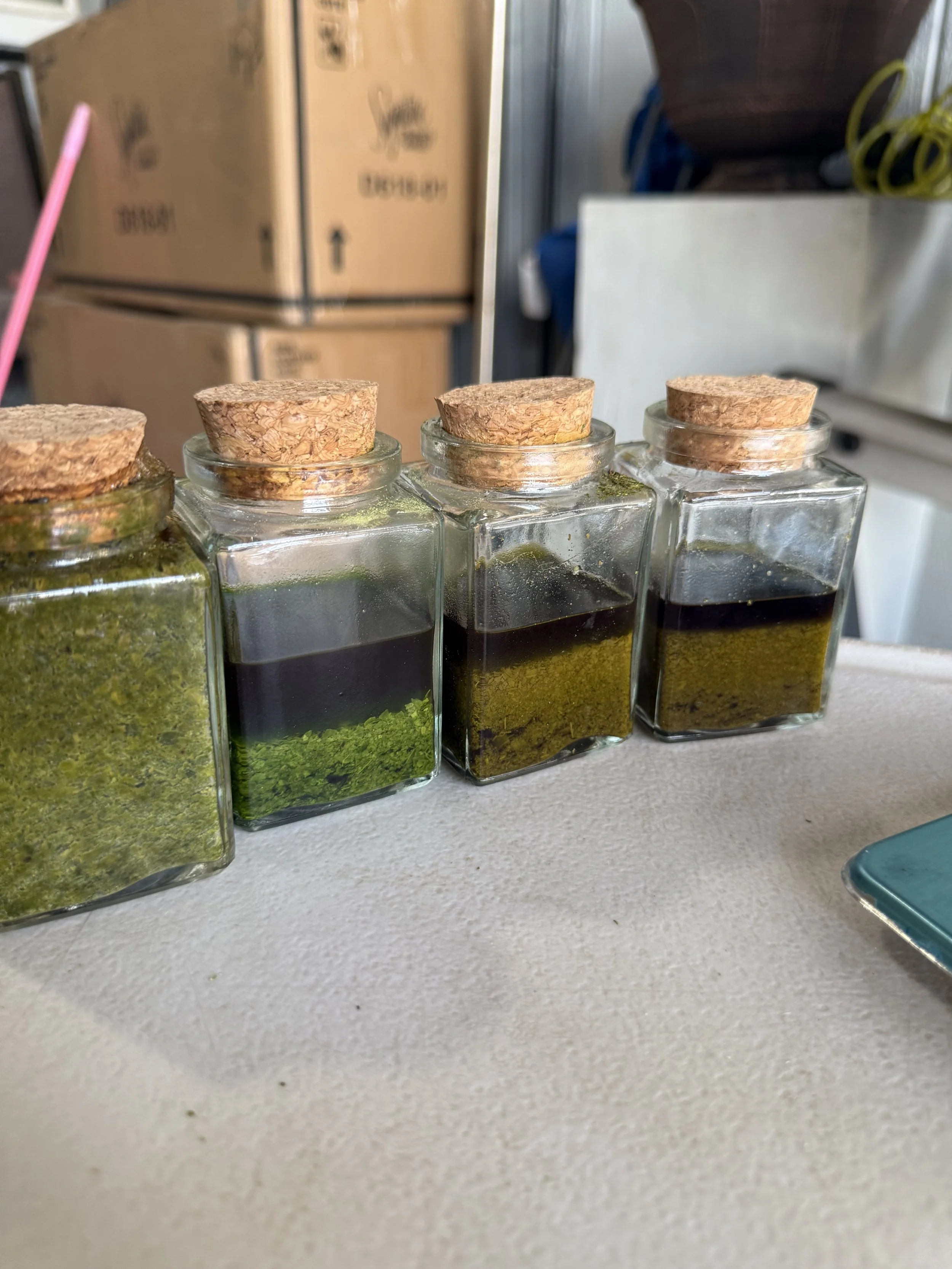
Concentrates of ʻĀnapanapa samples after ultrasonic and hydroalcoholic extraction before they are diluted into a suppressant. Photos courtesy Dominick Philippe Guiwa.
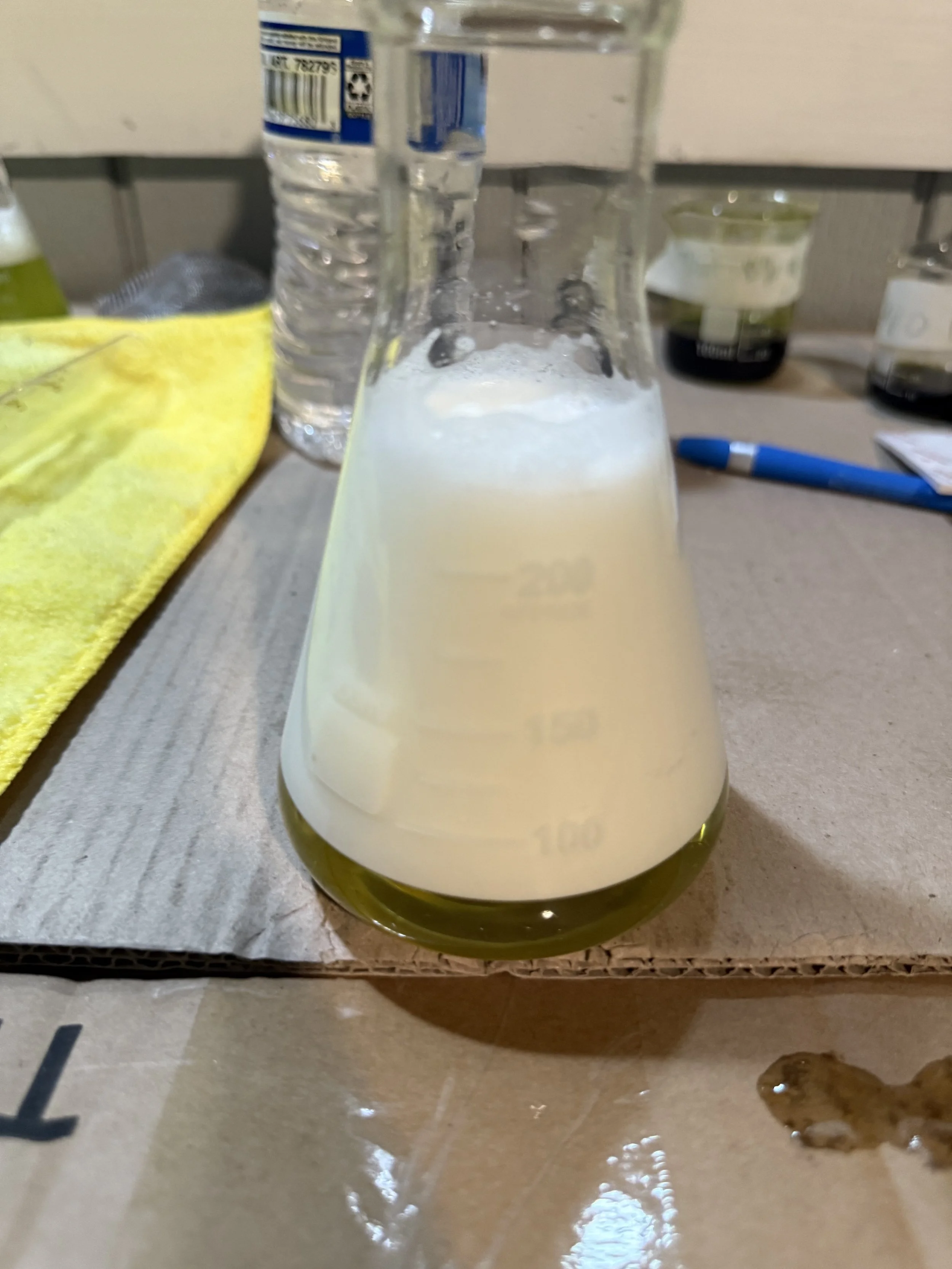
Concentrate of ʻĀnapanapa samples after ultrasonic and hydroalcoholic extraction before it is diluted into a suppressant. Photos courtesy Dominick Philippe Guiwa.