Active ʻĀina Transactions
We strive to protect entire landscapes and reconnect Hawai’i’s people to ‘āina, establishing reciprocal relationships with the land as Hawaiʻi’s ancestors did - safeguarding clean water, nourishing ‘āina that provides healthy food for our local communities, maintaining habitat connectivity for native species, and ensuring functional access to cultural sites.
Growing Hawaiʻi’s Farms
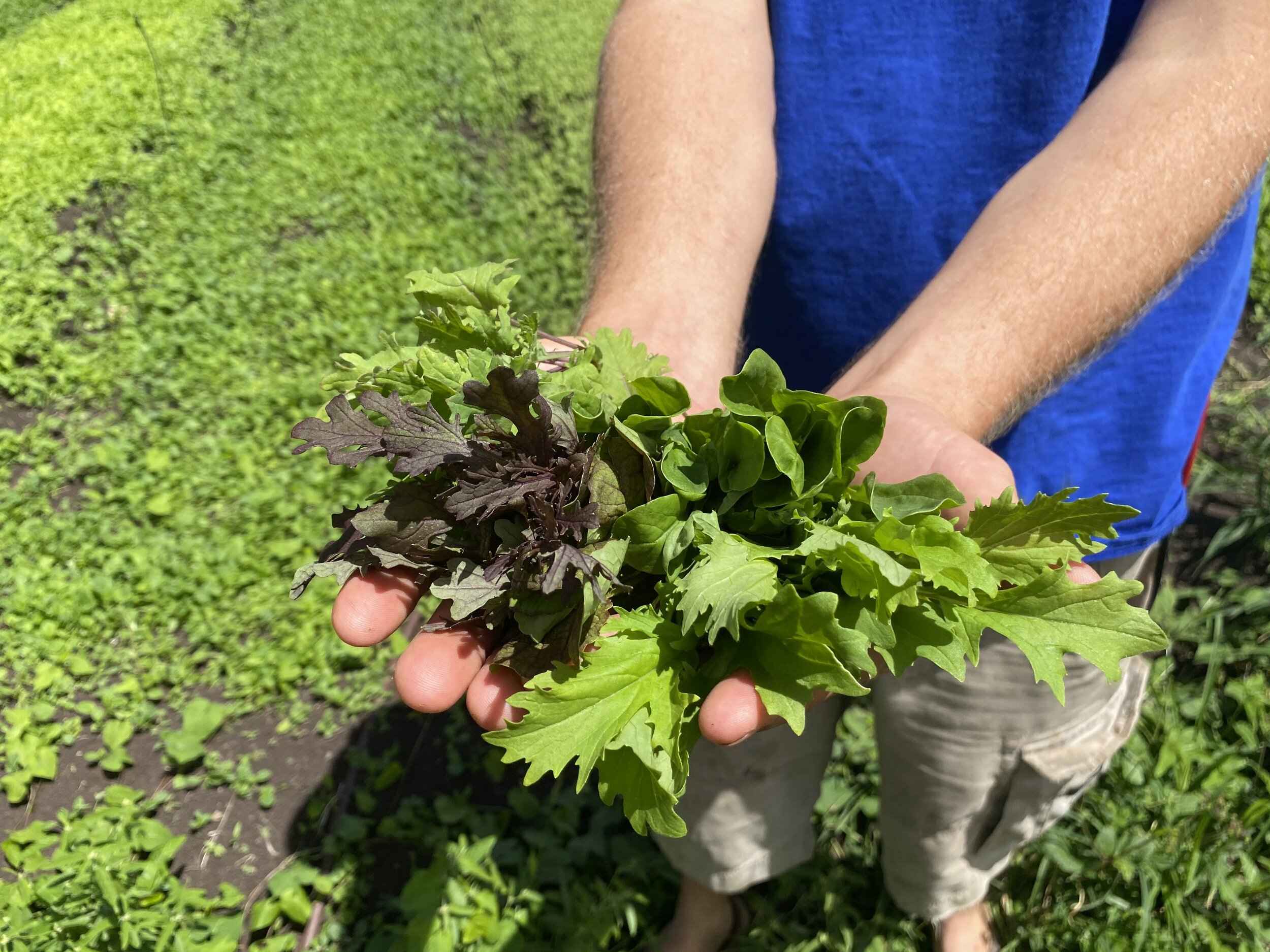
In the rich soils of Lualualei Valley in Wai‘anae, O‘ahu, a farm that has supported those most in need is poised to expand and receive permanent protection. The nonprofits Kahumana Farms and Hawai‘i Land Trust have partnered to forever dedicate 24 acres to regenerative agriculture that will feed community in perpetuity.
‘Āina Priorities
Hawaiʻi’s identity, values, culture and economy is rooted in the health of the land. Losing Hawaiʻi’s coastlines, fertile agricultural lands, and historic landscapes to development that doesn’t directly benefit kama’āina and local communities will inextricably alter Hawaiʻi, sacrificing the very core of what makes Hawaiʻi so special. Hawaiʻi Land Trust focuses on protecting privately-owned land with threatened natural, cultural, agricultural and/or community resources of high importance by fee purchase or Conservation Easement.
HILT’s Strategic ‘Āina Priorities plan focuses our work to protect land with the following criteria:
Biocultural Ecosystems
Ecologically significant landscapes that are woven together with Hawai’i’s cultural heritage, knowledge, practices, and traditions. This includes wahi kupuna (cultural landscapes), coastlines, wetlands and watersheds.
Food Systems
‘Āina that provides healthy food for our local communities.
Kama’āina and Local Communities
‘Āina that provides housing, “good jobs,” and essential services for kama’āina and local communities.
When HILT works to protect a place, we meaningfully engage kamaʻāina, lineal descendants, and the surrounding community. We empower them to lead the effort, knowing that community-led land protection results in a stronger community, and community stewardship of the land once protected.
-
![]()
Waikalua Loko Iʻa (Fishponds Complex), Kāneʻohe, Oʻahu
HILT is working with the nonprofit Pacific American Foundation and the Readiness and Environmental Protection Integration (REPI) Program to ensure permanent protection of Waikalua Loko Iʻa (fishponds) with a conservation easement—the last two remaining ancient loko i’a in the Kāneʻohe ahupuaʻa. This is a place of education where all are welcomed to join in culturally-rooted stewardship restoration work. Once protected with a perpetual conservation easement, the loko i’a will be safeguarded and educational access will always continue.
-
![]()
Maunawili Loʻi, Pālāwai & Makaliʻi, Oʻahu
HILT is helping the Maunawili community to purchase and conserve traditional kalo lands which will be stewarded by the nonprofits Hoʻokuaʻāina and Kauluakalana. These loʻi kalo lands are part of a bigger effort to protect 1,000 acres in Maunawili, with Hui Maunawili-Kawainui, the State DLNR, and The Trust for Public Land. Collectively, we are working toward collaborative community-based land stewardship that reconnects people to ʻāina and allows Maunawili to feed Oʻahu once again.
-
![]()
Mokae to Makaʻalae, Hāna Coast, Maui
HILT has supported the Hāna based nonprofit organization, Ke Ao Hāliʻi in the successful purchase and permanent protection of over 150 acres of coastal cultural and agricultural lands since 2020. Together, we are in the final stretch of the effort ensuring that neighboring lands that were donated to Ke Ao Hāliʻi are permanently protected with a conservation easement.
-
![]()
‘Ohana Kealoha Loʻi, Niuliʻi, Kohala, Hawaiʻi Island
Located at the convergence of two streams are the verdant ʻOhana Kealoha loʻi and agricultural lands of Niuliʻi, Kohala, on Hawaiʻi Island, HILT has partnered with the Kealoha ʻOhana (family) to ensure the forever protection of generational ʻohana loʻi kalo (wetland taro) lands, reactivating kalo (taro) cultivation once again in this storied place. Project partners have applied to the County of Hawai‘i’s Public Access, Open Space, and Natural Resources Commission (PONC) for conservation easement acquisition funds.


