Ka Malu o Nā Kahu: A Day with Māhukona Steward Kaʻāina Ishimine
On a typical Friday during the school year, Māhukona Steward Kaʻāina Ishimine prepares for his day by waking up around 5:15 at his home in Hāwī. He pours himself a steaming cup of black coffee, which he sips while the TV news plays in the background, and he prepares for his upcoming day with students from Naʻau ʻŌiwi, Kohala High School’s alternative learning program.
Before he leaves for Māhukona, there is one crucial stop – the Naito Store, where he fills up on bags of ice to ensure everyone stays hydrated.
“Ice water is a necessity for the hot, dry weather we have at Māhukona,” he says.
Snacks for the very hungry teens – which include “protein bars or basically anything you can find in a box of 30 from Costco” are purchased ahead of time.
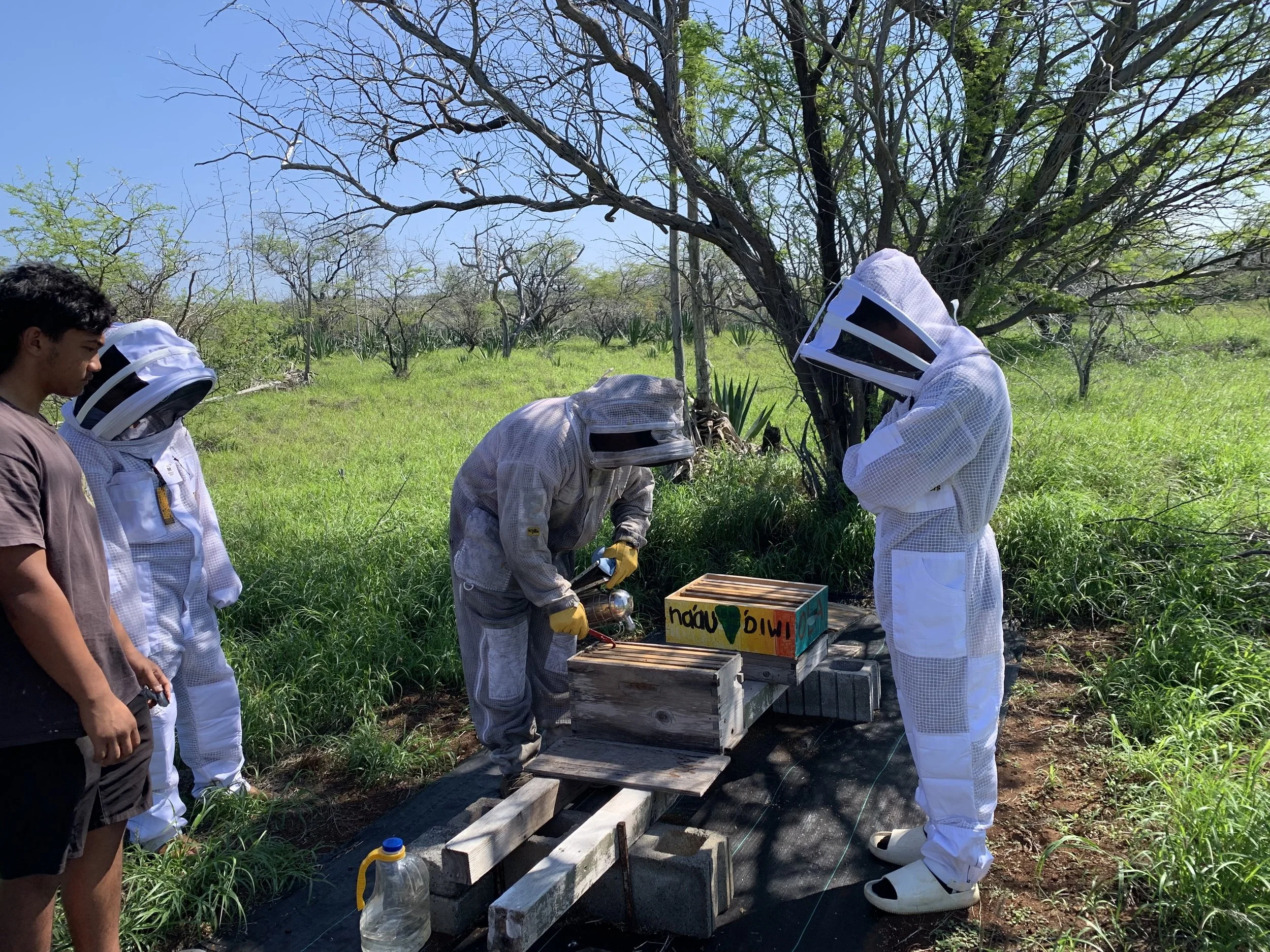
Naʻau ʻŌiwi students surveying bee hives at Māhukona.
Upon arrival at Māhukona (usually before 7:30), Kaʻāina meets up with fellow steward Keone Emeliano. The pair sets up tables near the hale and then greets the students when they arrive around 8:30. After a brief introduction, the students assist with general site maintenance, such as watering or mulching plants, or adding soil to pots. That usually takes about 45 minutes, but it can be more time-consuming, such as when downed kiawe tree branches littered the ground following the wet and windy months of early 2026.
Before moving on to their sustainability activities, the students get a brief respite.
“We have to give teenagers breaks. Lord, forgive us if we don't give them breaks,” Kaʻāina says, laughing. “They make house. And they chat. And they check their phones.”
Keone and Kaʻāina work with one group of about 15 Naʻau ʻŌiwi students each school year. The program is fully self-contained, meaning students are together for the entire duration of the school day with the same teachers, Monday through Friday. Because of this, the program has the flexibility to be off-campus where the students’ education is enhanced through community partnerships with organizations like HILT, Nā Kālai Waʻa, a Native Hawaiian nonprofit that provides voyaging programs, and Hoʻōla Honey, a native Hawaiian business that rescues honeybees and creates honey products. The program focuses on project-based, culturally relevant education, including agriculture and culinary arts. This program serves "at-promise" students through innovative, hands-on learning—such as the award-winning Kalo Challenge—to foster engagement, academic competence, and social-emotional growth.
After their break, Keone and Kaʻāina usher them through their sustainability activity.
The sustainability activity can include monitoring the honeybees for Hoʻōla Honey, testing water for Nā Kālai Waʻa, working on culinary products, or even general site maintenance. While the students work, Kaʻāina stays busy asking and answering questions, taking photos, picking up trash he finds along the way, and keeping them on task. The students are motivated and engaged, according to Kaʻāina.
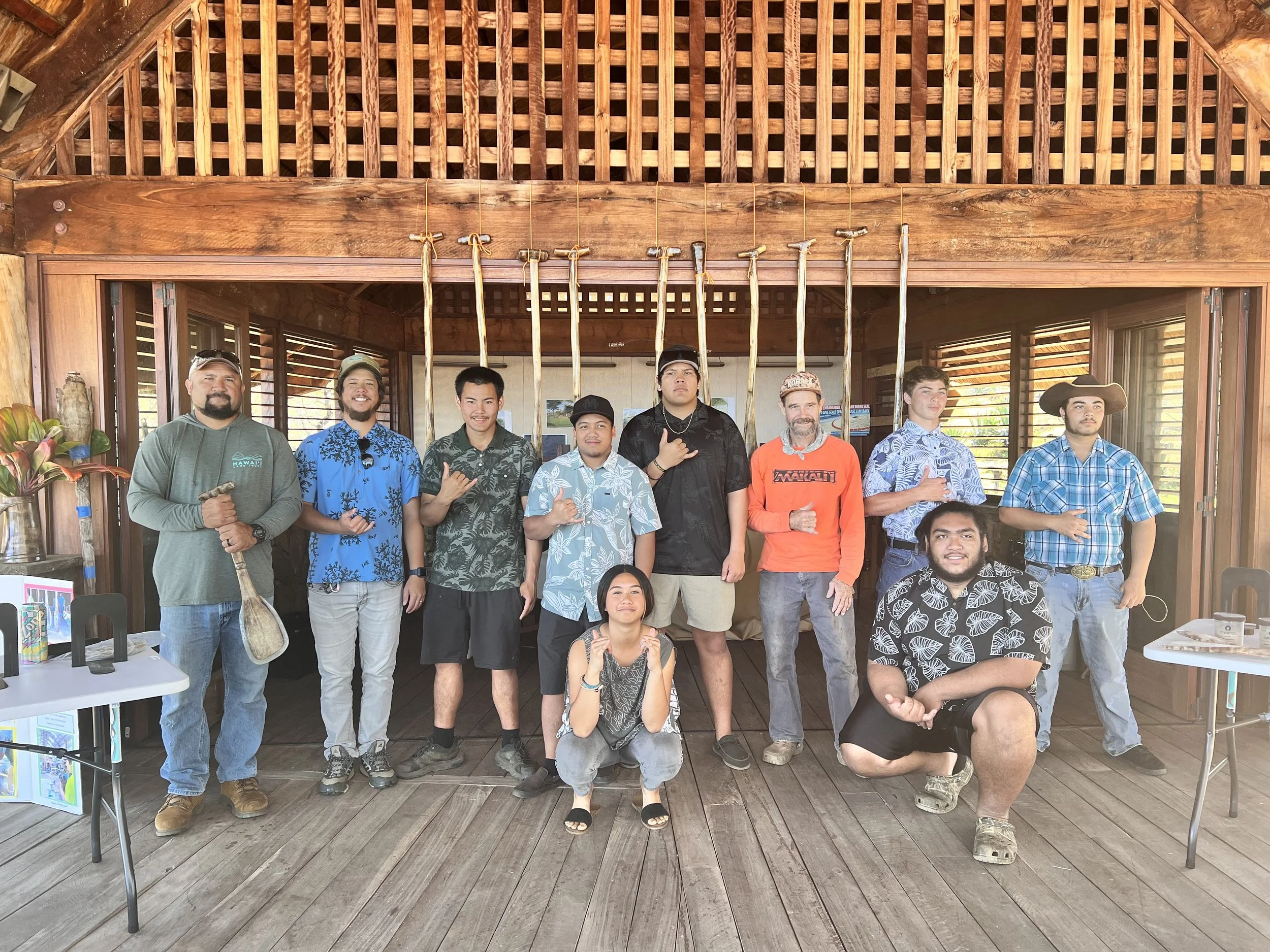
Naʻau ʻŌiwi students and partners following a presentation of how they utilized harvested invasive sisal from Māhukona to make canoe paddles.
“Once we put them on a task, they are awesome and they really know how to work together,” he says.
When they return to the hale, they meet up with Keone’s group and do a “final sit-down” and reflection while sipping on ice water. A recent question for the group was, “What has Māhukona taught you?”
Anything goes for answers, he says.
“A lot of them said, ‘It taught me to show up every day,’” Kaʻāina says. “That is awesome, because even adults sometimes have a hard time showing up every day! Or, they might have learned patience because they understand that, in a dry, arid environment, things take longer to grow. Or, how the bees have to work together in order to survive, similar to the way they work together in the classroom to support their common goal.”
At around 12 p.m., Kaʻāina heads toward home, where he answers emails and looks ahead to the next gathering.